
Innovation,
Quality & Style
As the railroad connected Sparta to the rest of the world, soon an industrial boom was ignited. The prospect of shipping materials in and finished products out while situated in a relatively close proximity to the Grand Rapids metropolitan area made Sparta a very attractive prospect for factories. With a ready and willing workforce, skilled tradesmen, as well as individuals possessing ingenuity, determination, and a good measure of courage, the future was promising. And so, the Industrial Revolution dawned bright for the fair village.
Industry Articles
Furniture Factory all at the same location: "Sparta Furniture Company", "Welch Folding Bed Company", "Sparta Coach & Body" and "Thwaites X-Ray Machine"
The Foundry "Holm Machine Manufacturing Company"
Holm Machine
Manufacturing Company
Shortly after the founding of Sparta township, a child was born half-way around the world in 1852 who would someday become the catalyst to accelerate the Michigan village's industrial growth.
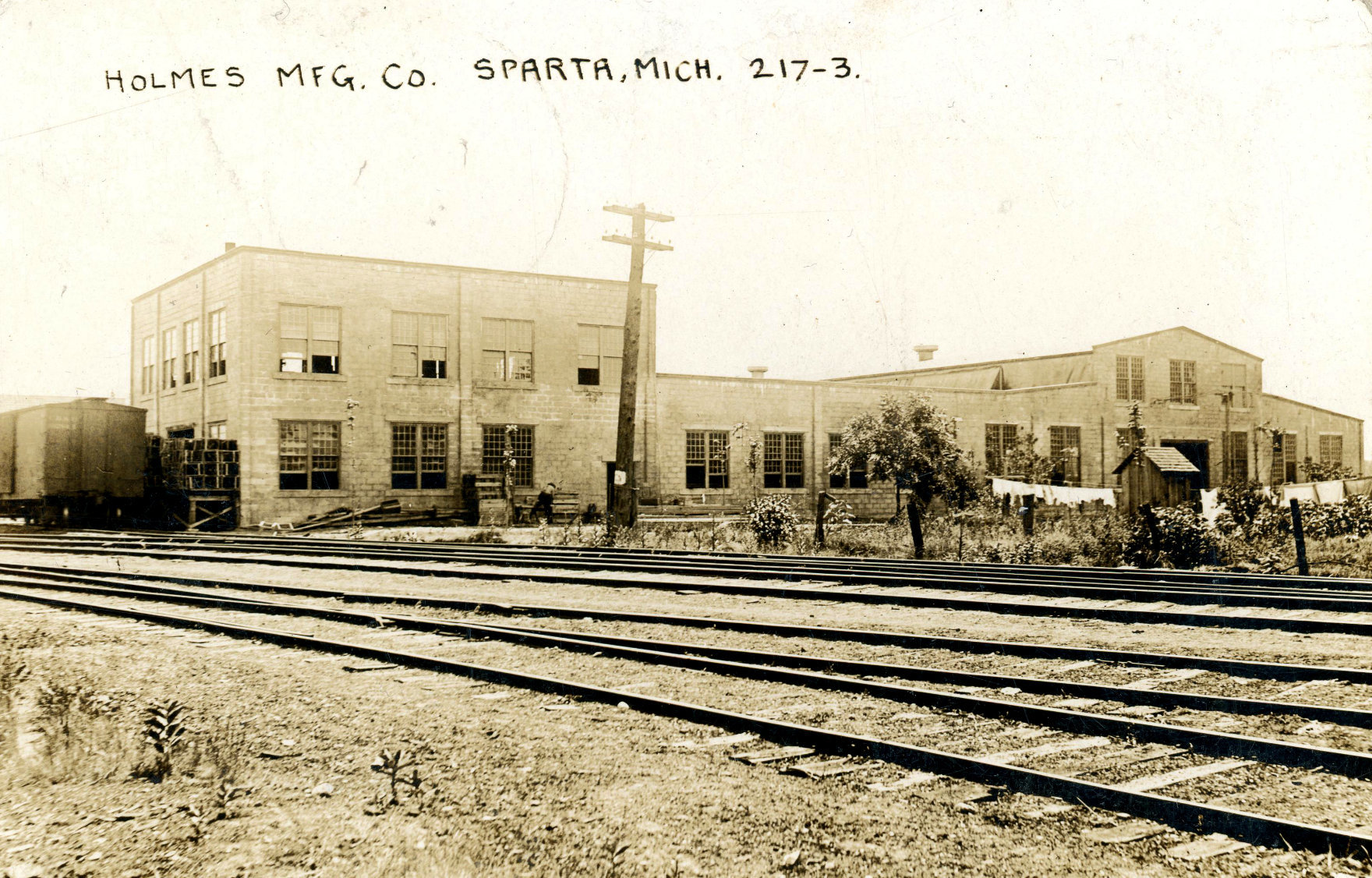
Holm Machine Manufacturing Company west of the railway and just south of Gardner Street--courtesy of the Sparta Karl Nickolai Collection
Peter J. Holm
Mechanically gifted, Peter was born in Kopparberg, Säfsnäs, Sweden. As a young man, he took Charlotte Fahlgren as his wife and like most, they began a family. Seeking the American dream, Peter and his family boarded a ship on April 1, 1880 at Gävleborg, Söderala, Sweden and immigrated to Chicago, Illinois. The ship record indicated his occupation was as a "Sågare", which means a sawyer.
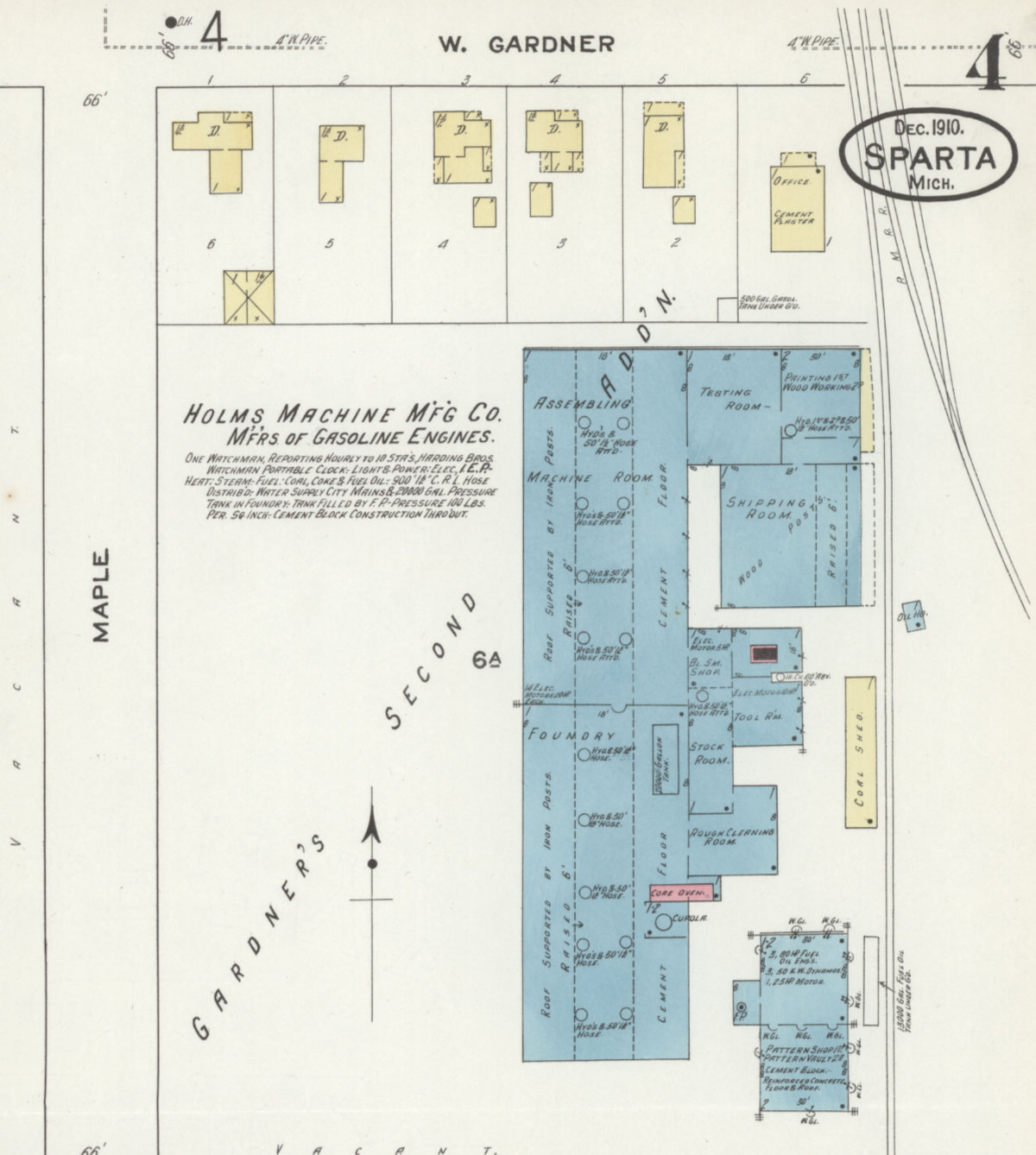
1910 Sparta Sanborn Fire Insurance Map--courtesy of the Library of Congress
When the 1880 Federal Census was enumerated on the 8th of June, the Holms were already settled into their new home in Eau Claire, Wisconsin, where Peter began his career at McDonough Manufacturing as a machinist, pattern maker, and foreman.
Five sons were trained as machinists and pattern makers, as well as in other aspects of the business: John Herman, Henry Christoffer, Walfred Carl, Gustaf Adolph, and Luther Emanuel. John possessed a lifelong ambition to become a physician, so he pursued his education.
Meanwhile, the father invented various machines and other devices; he was especially fascinated by gasoline engines.
Peter and his eldest son, John, founded the Holm Machine company of Minneapolis, Minnesota. Drawing from Peter's experience in Sweden operating a sawmill, the business became known for its manufacture of sawmill equipment. In 1904, the company was relocated to Eau Claire, Wisconsin. The following year, Peter, along with his partners, filed articles of incorporation for another enterprise, the Northwestern Steel and Iron Works as reported by Eau Claire's The Daily Telegram on November 10, 1905, with $50,000 in capital stock. A figure that is equivalent to $1.9 million today.
He remained in leadership of this company, which manufactured marine engines and concrete machinery, until November 1908--at which time he retained stock in it. After shipping concrete equipment capable of producing 700 blocks a day to Sparta, Mr. Holm joined his sons to start a new business and oversee construction of the new facility though the winter months. Articles of incorporation were filed at Grand Rapids, Michigan, which established the Holm Machine Manufacturing Company with $100,000 capital--an amount currently valued at $3.6 million with inflation. Immediately, they began work in a cornfield on a five acre site and then broke ground for the facility at Sparta which, when finished, would employ 400 men.
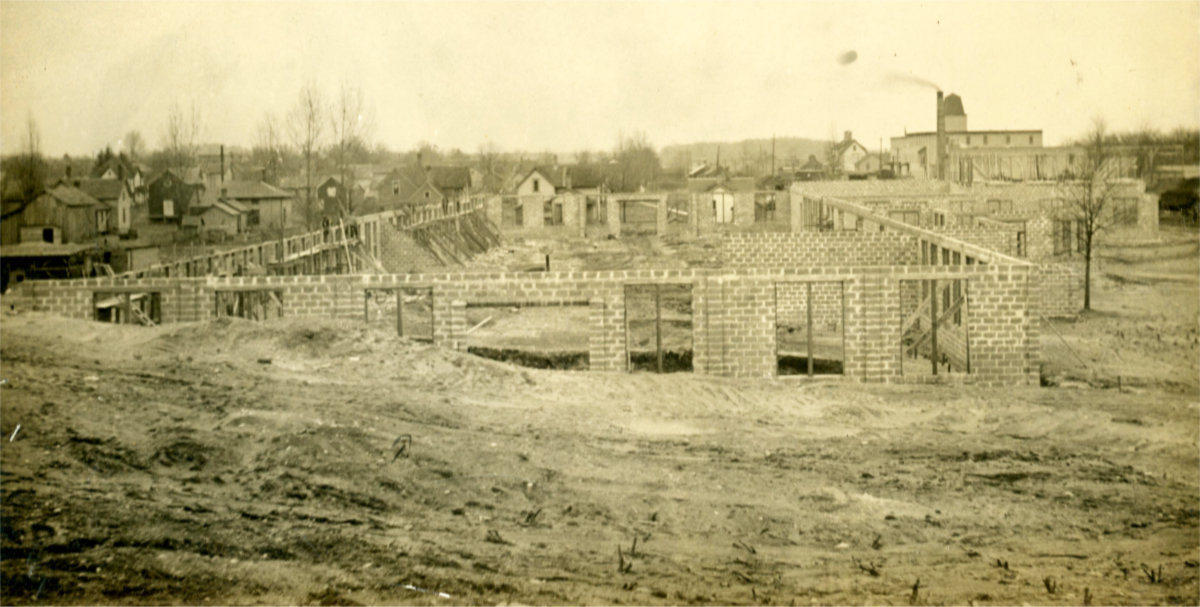
Construction in progress of the Holm Machine Manufacturing facility amid remaining corn stubble with Gardner Street homes beyond and the Welch Folding Bed Company plant to the upper right--courtesy of the Sparta Township Historical Commission
Men who accompanied Peter Holm to Sparta included: John Lundquist, John Nelson, H.O. Helstrom, Henry Holm, Adolph Holm, Einar Phil and Harry Bradstrum, Edward and Harry Eckland and Henry Modine to assist in the work. Another son would join them in December, according to The Eau Claire Leader-Telegram.
Einer Phil Bradstrum
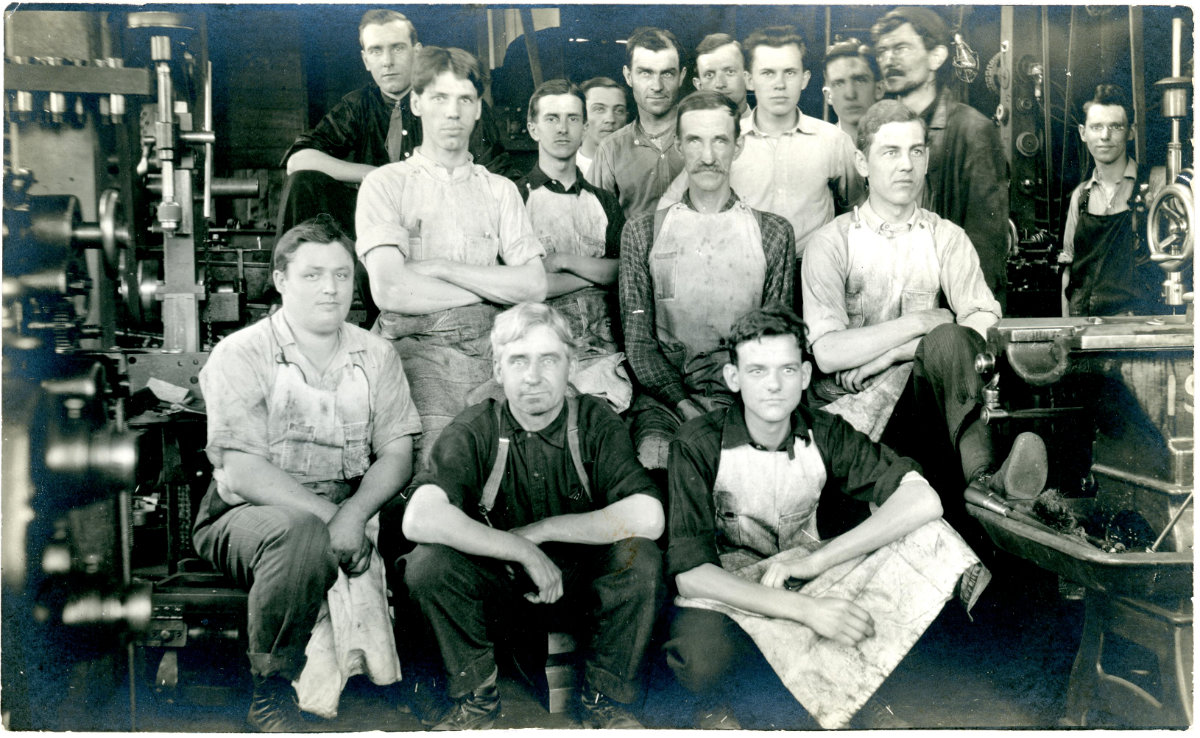
Workmen at Holm Machine Manufacturing Company: top left was Einer Phil Bradstrum and lower left was John Herman Holm. Others are likely some of the men brought from Wisconsin--courtesy the Karl Nickolai Collection
"Many funny things can and did happen in the old hotels," Arzie Pinckney recalled in his weekly newspaper column, "I Remember" which was put into print on December 22, 1965, by The Sentinel-Leader. "One of them happened to E. Phil Bradstrum. It was typical of a small town hotel. Phil and eight other men came to Sparta on October 9, 1910 (actually, in 1908), to start the building for the Holmes Gasoline Engine Factory." (Holm Machine Manufacturing Company)
"As he got off the train, a man came up to him and asked if they were the men who were going to build the new plant. He told them to follow him and he would show them where they were going to stay while they were here. The man was Charlie Robinson and they followed him across the street to the Hotel Sparta. He took them upstairs, showed them the bedrooms, and told them they would have to double up."
"Phil looked at the bed with the sagging springs and said that it looked like "an old broken down hammock or it put him in mind of a sway-backed horse whose back in the middle is about six inches lower than its shoulders and hips." But they stuck it out and the next day they started to look at the site for the plant. It was on C.H. Johnson's farm and they had to clear out the corn stubbles before they could lay out the buildings; but that is part of another story."
Sparta historian, Jim Lyals, once told me how Mr. Bradstrum's feet stuck out from the foot of the bed at the Sparta Hotel because he was so tall and the bed was too short. Not so surprising as his WWII registration card stated Phil was 6'3" tall.
Einer Philip, entered life on August 21, 1886 at Eau Claire in Eau Claire county, Wisconsin, the son of Swedish immigrants John E. & Anna Otellia (Lindholm) Bradstrum. As a young man, he learned the pattern maker trade and, along with his older brother Harry Carl, was employed by Peter Holm.
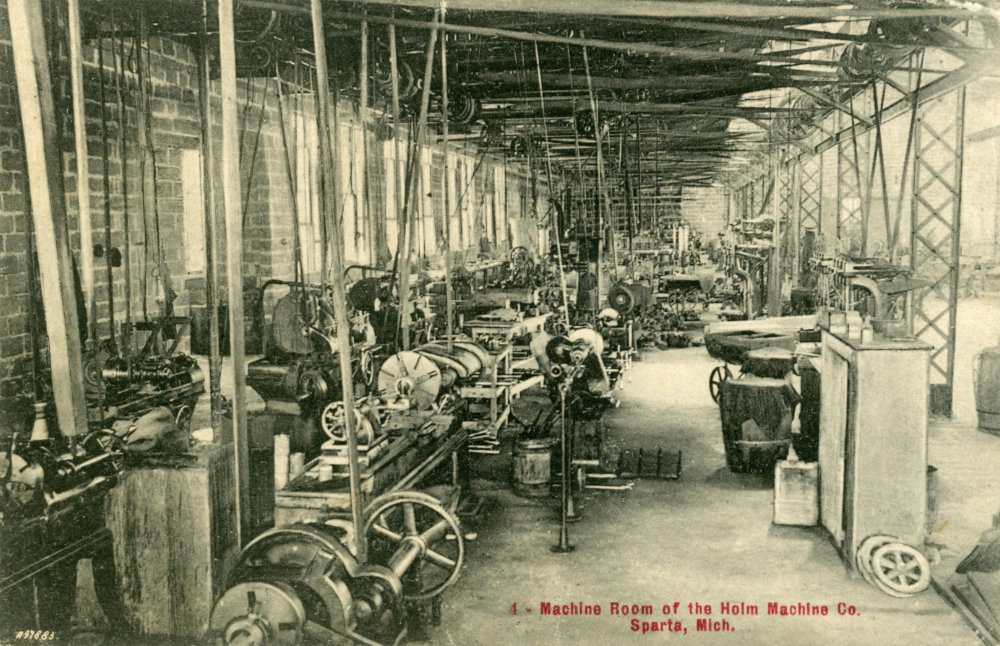
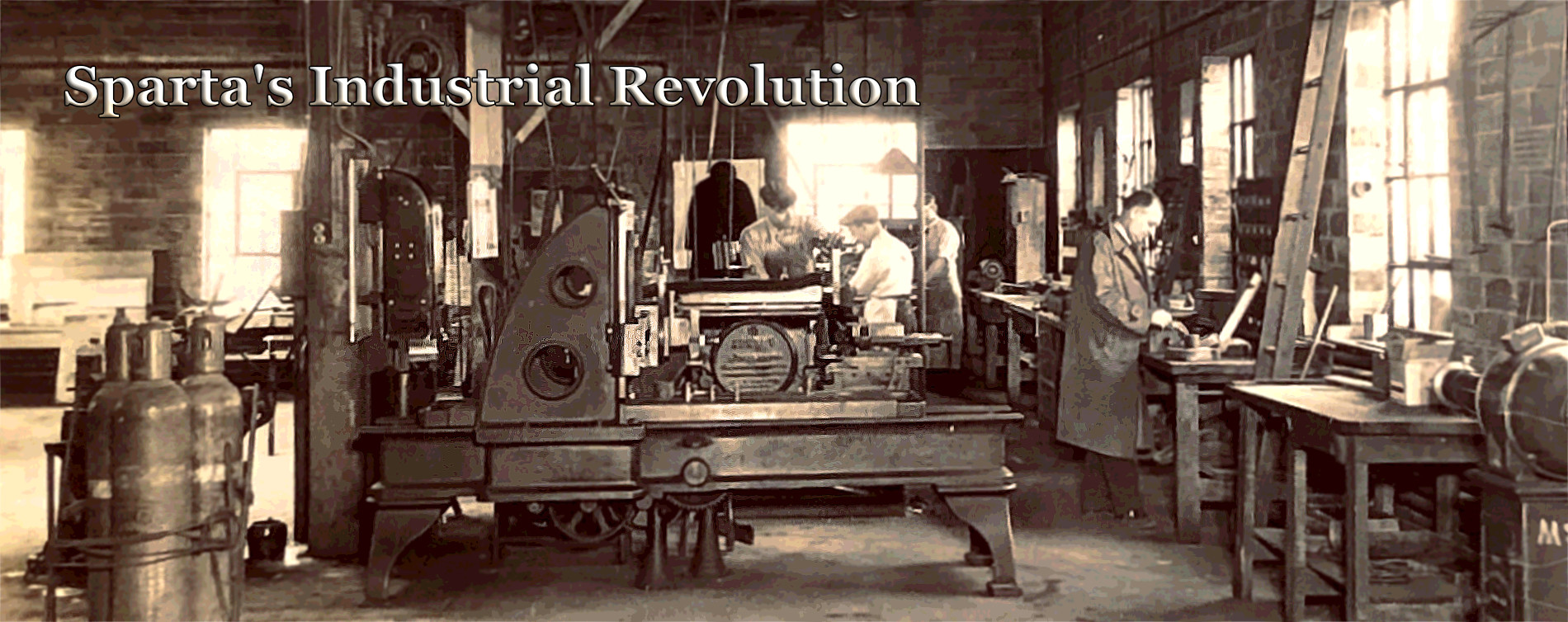
The machine room at the Holm factory--courtesy of the Sparta Township Historical Commission
Gasoline Engine Factory
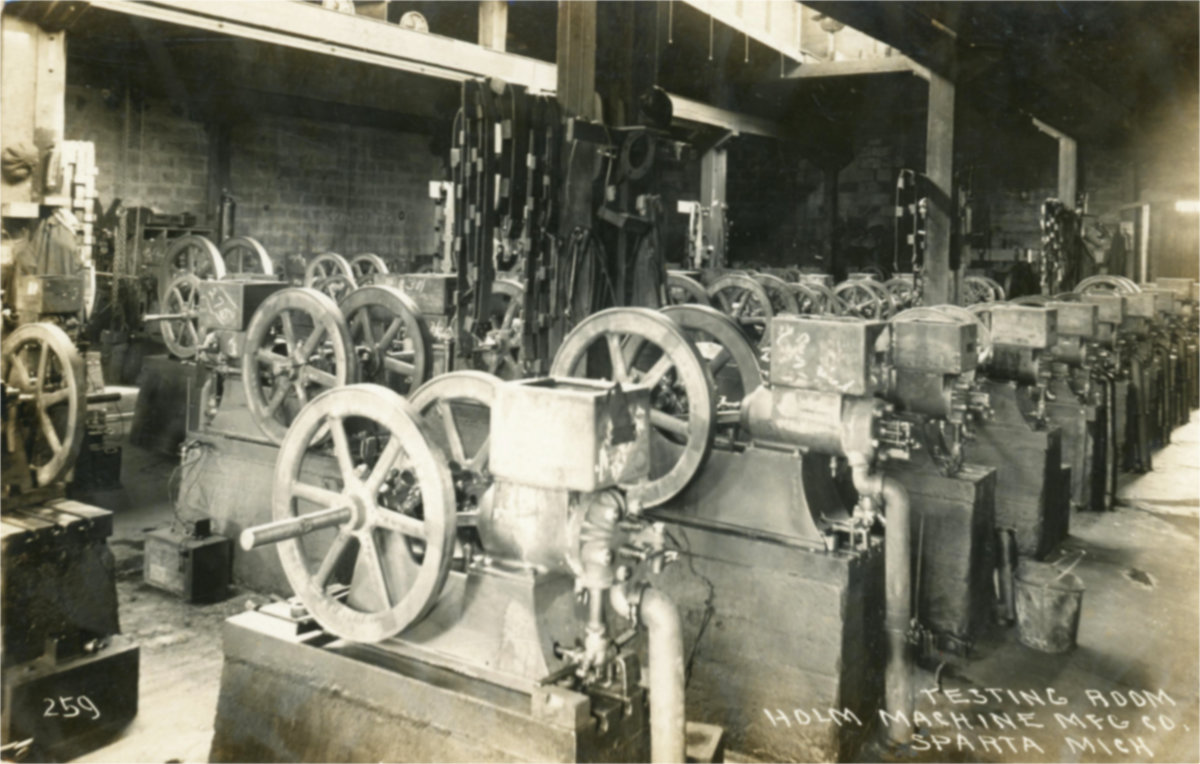
The testing room for the Sparta Economy engines at the Holm Machine Mfg. Co.--courtesy of the Sparta Township Historical Commission
The construction of a new factory on five acres, between Gardner and Maple Streets west of the railroad, began on November 8, 1908... almost immediately, with just a slight delay in the arrival of concrete block making equipment from Eau Claire, Wisconsin. Plans called for a foundry along with pattern and machine shops for the manufacture of gasoline engines designed to be used in marine, farm, and automobile applications. Additionally, there would be facilities for heating, tool and stock rooms, a blacksmith shop, paint shop, testing, crating, and shipping of the product. And, of course, a power plant.
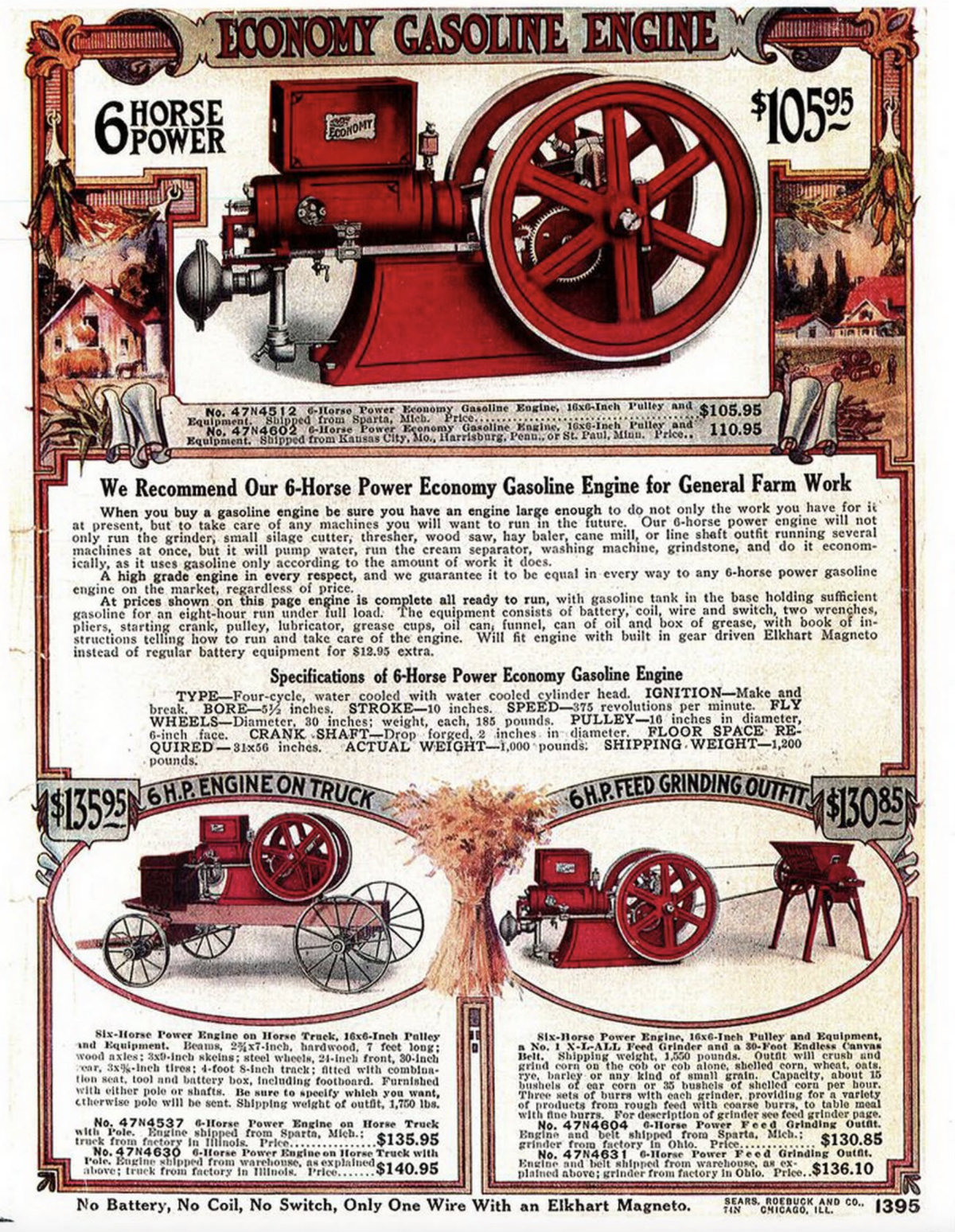
Holm Economy engines sold in the Sears, Roebuck & Co. catalog--courtesy of Don Harrison's Up North Memories Postcards & Paper Collectibles
April 15th of 1909 was set as the target date to commence factory operations. It was projected they would complete somewhere between 10,000 and 15,000 units each year of Peter Holm's Economy gasoline engines to be sold exclusively through the Sears, Roebuck & Company's catalog.
Although the product was an enormous success, there were friction and disagreements which affected day-to-day operations. Sears bought out the Holms on February 7, 1909, but kept P.J. Holm as a consulting engineer and demoted his son, J.H., from secretary-treasurer to a purchasing agent position as they brought in their own people from Chicago to take charge of management duties.
An associate, Harry Eckland, who was visiting family back home in Wisconsin, was interviewed in August by The Eau Claire Leader-Telegram newspaper. He reported that "the company is enjoying a splendid business being over rushed with orders. The plant," Harry said of Sparta's engine factory, "occupies about 62,000 square feet of floor space consisting of the foundry, machine and pattern rooms."
In March 1910, Charles H. Jackson of the Sparta Milling company, who manufactured and sold power to the community residents and businesses with his steam driven generators, couldn't keep up with the demand for energy due in large part to the requirements of the Holm factory. So the engine company added generators to their facility and expected to have excess power to sell back to Sparta Milling, but a shortage remained.
Mr. Jackson issued an ultimatum as he threatened to cut off electricity service to the plant--unless the factory agreed to a new contract which required them to pay higher rates. Without delay, the plaintiffs at Holm and Chicago backers holding contracts for large orders took Sparta Milling to court. Service was restored--with only hours to spare before the looming deadline to pull the plug.
This incident brought to light a highly questionable arrangement which resulted in an eyebrow-raising headline and a revealing exposé.
ODD LIGHT PLANT--Sparta Has One That Makes Gasoline Engines.
--DODGED STATE LAW--Citizens Outwitted Statute in Regards to Bonus
--And Now Municipal Works Is Operating with Power Bought from Private Firm.
published by The Grand Rapids Press on 30 Mar 1910
Sparta, Mich. March 30.--It isn't every village which can boast of an electric lighting plant which turns out gasoline engines. In fact, the ordinary man would say that such a thing is impossible. But if it is impossible then the village of Sparta has attained the impossible, for not only does its municipal lighting plant turn out gasoline engines, but it doesn't furnish a cent's worth of electricity for any purpose, being obliged to buy the power to operate its own machinery.
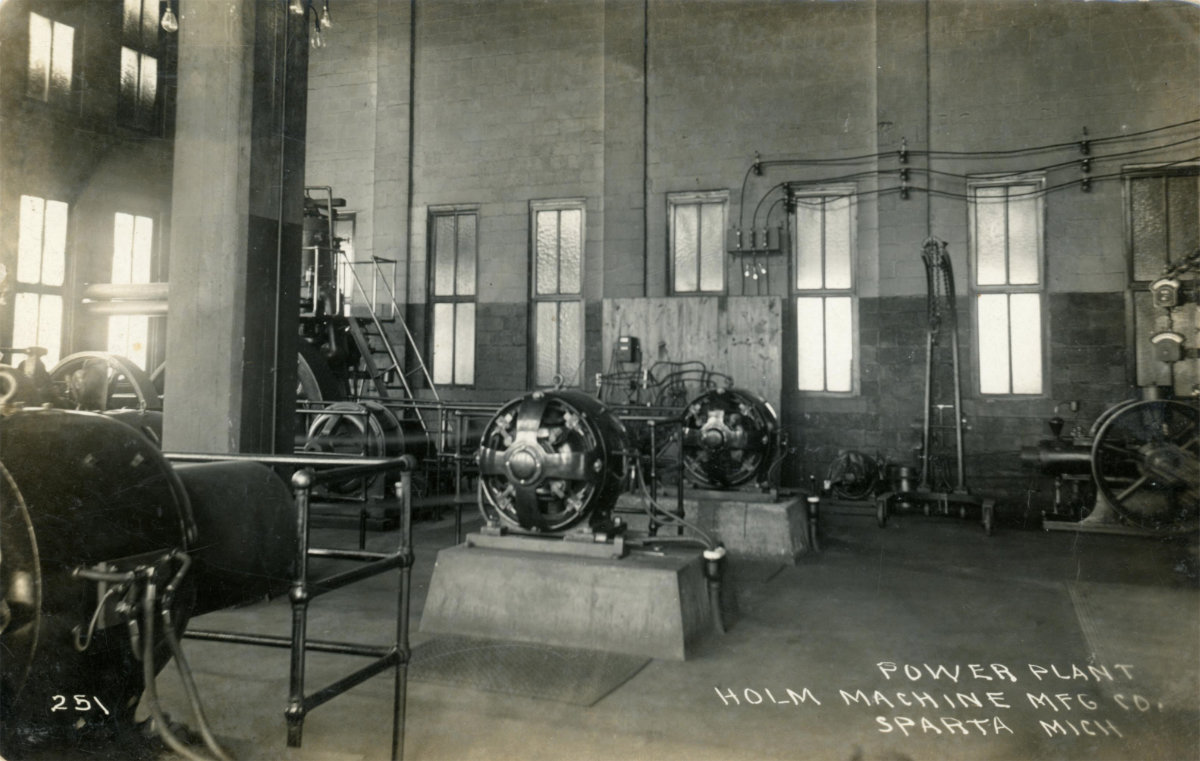
Holm power plant generators--courtesy of Sparta Township Historical Commission
This peculiar condition of affairs came about through a scheme to dodge the provision of the state law preventing villages from bonding for bonus funds for factories. Sparta wanted a factory and got it for $20,000. No, that's slightly inaccurate. They erected a municipal lighting plant for $20,000. And the story of the big lighting plant is somewhat interesting.
Invented an Engine.
It began when Peter J. Holm, who lived in Chicago, invented a gasoline engine a few years ago. At that time his son, J.H. Holm, was a purchasing agent in the employ of Sears, Roebuck & Co., of that city. He took his father's gasoline engine and interested his employers in the device. They told him to go ahead with a factory and that they would take some stock and would contract for the whole output of the plant.
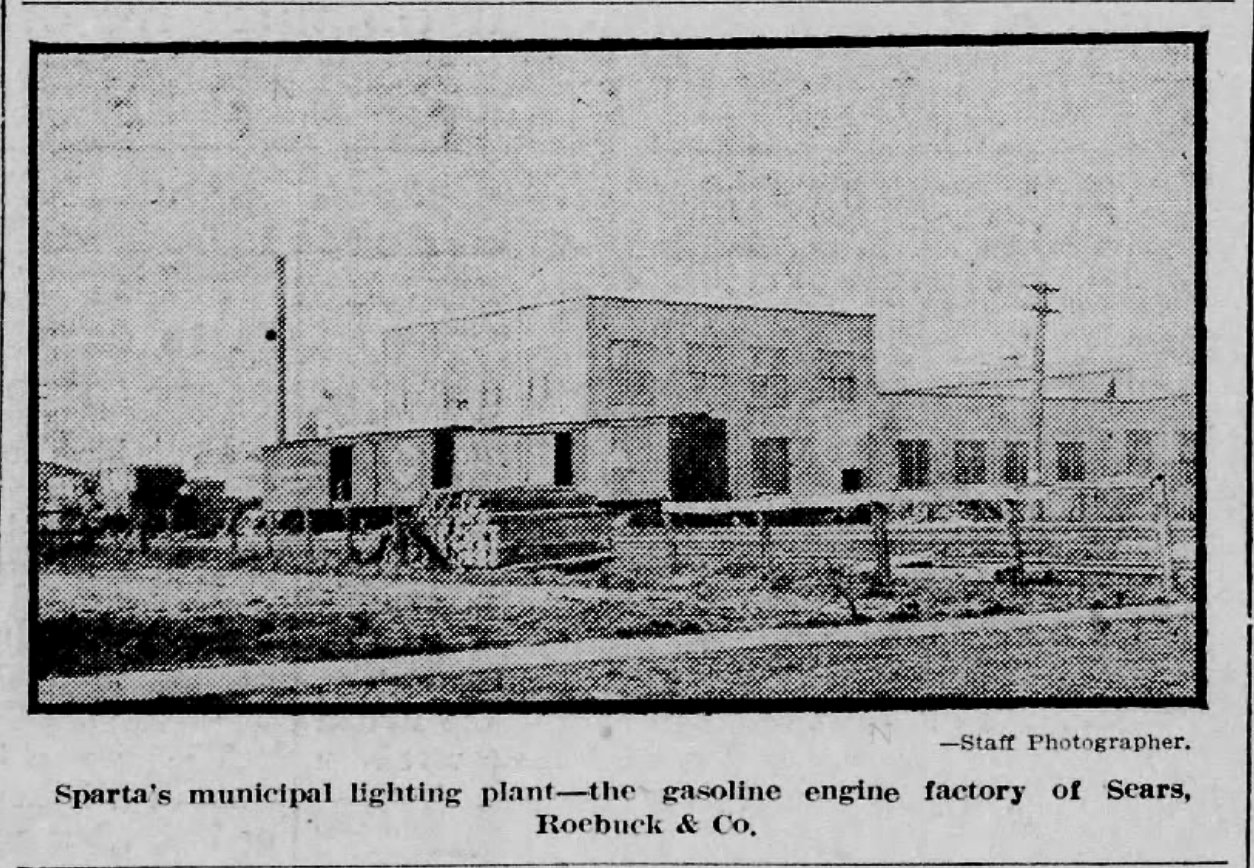
"Sparta municipal lighting plant--the gasoline engine factory of Sears, Roebuck & Co."--The Grand Rapids Press (30 Mar 1910)
Well, about that time Sparta was feeling around the country in hopes of getting a fast hold on some big institution which would add to the commercial prestige as well as to the glory of the village. Negotiations were begun with Mr. Holm. But Sparta's proposition wasn't the only one Mr. Holm was considering and some other villages outside the state were offering nice little inducements in the way of bonus funds. Apparently Sparta, handicapped by the Michigan law, was out of the running.
Then it was that some of the wise heads of the village got together. The matter was discussed pro and con and it was decided that something must be done to bring the industry to Sparta. A committee looked around a bit and decided that Sparta needed a municipal electric lighting plant.
Come on over and we'll give you $20,000 with which to build a factory," was the message sent to Mr. Holm. Then the wise heads became industrious and figured out the scheme.
Some of the merchants got together and organized the Sparta Business Men's association, the principle purpose of this organization being the construction of a municipal lighting plant. Then the proposition was submitted to the voters, every voter knowing what he was voting for, in spite of the fact that the ballot called for his voice for or against the bonding of the village for $20,000 for the purpose of building such a plant.
The proposition went through and Mr. Holm accepted the offer of Sparta to locate his factory here. Then the merchants' association decided that Mr. Holm was the man to build the electric lighting plant. So it gave the money to Mr. Holm, taking a mortgage on his plant and machinery for the full amount.
Holds a Mortgage.
It was stipulated, however, that should the new company engage a certain number of workmen for a certain time and pay out a certain sum in wages, exclusive of officers' salaries, the mortgage would become invalid. If the company failed to come up to the terms of the contract the mortgage could be foreclosed. Then the Holm's Machine Manufacturing company was organized. Sears, Roebuck & Co. taking a block of the stock. H.J. Holm was installed as resident manager.
This was about a year ago. The plant ran along for twelve months but didn't seem to be making money. Sears, Roebuck & Co. stood behind it, however, until the interest of that firm amounted to somewhere in the neighborhood of $100,000. At the begining of this year the Chicago firm purchased the interest of the Holms and decided to enlarge the plant. And this year new buildings will be erected and $30,000 worth of new machinery will be installed. And in the meantime the village is buying its power for lighting from the Sparta Electric Milling company, the same plant which furnished power for its municipal lighting plant.--Angell.
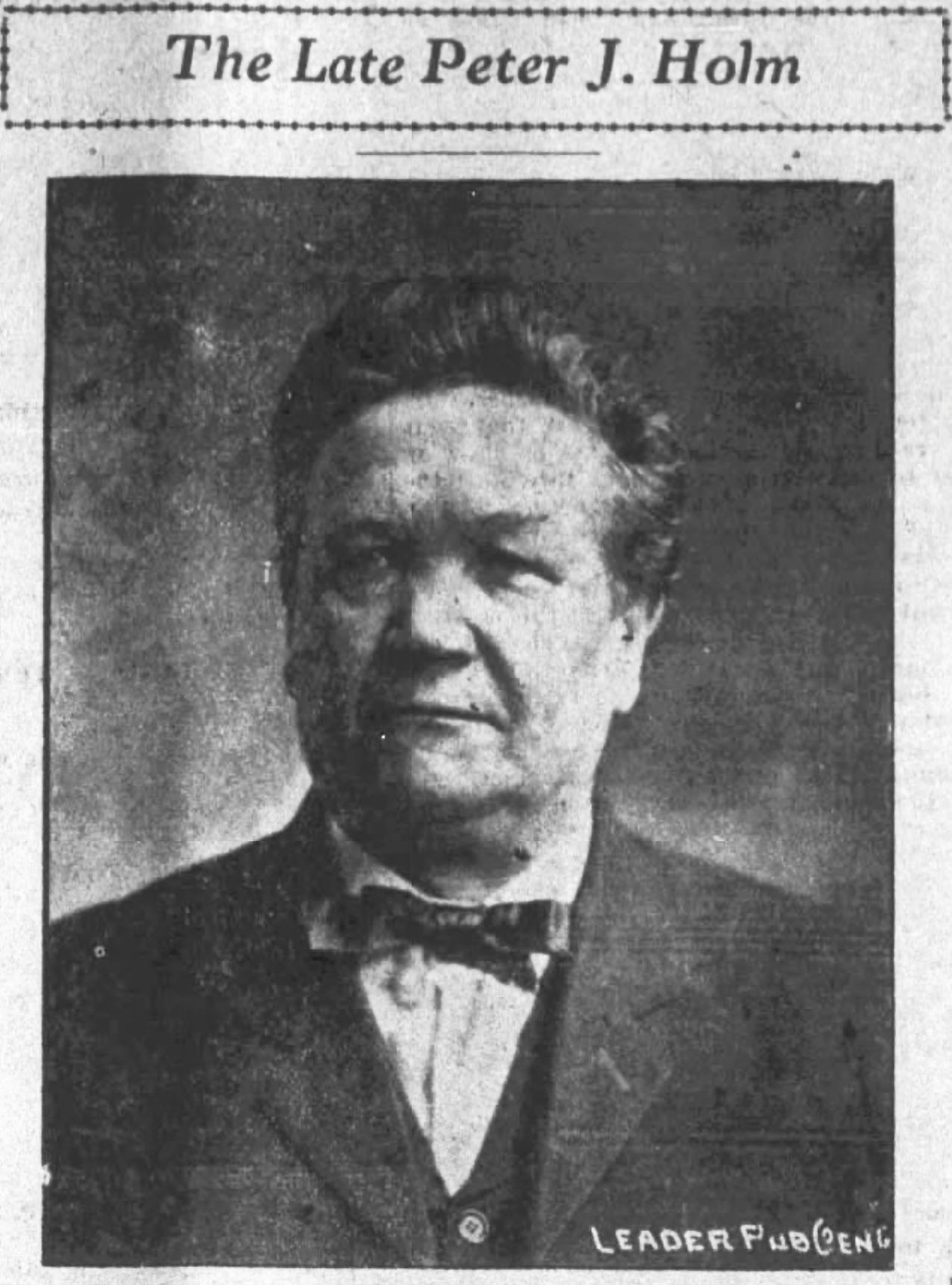
Peter J. Holm--The Eau Claire Leader-Telegram (4 Jun 1911)
Last Straw
The Holm family had had enough and swiftly returned to Eau Claire, Wisconsin, where, on April 25th they were recorded in the 1910 Federal Census at 1214 1st Avenue. Peter was a "Machinist" with his "own shop". Son John, at 30, had completed medical training and was a "Physician" with his "own practice". While at Sparta, he had started a medical practice as well.
Just one short year down the road, the family patriarch, P.J. Holm, unexpectedly passed away.
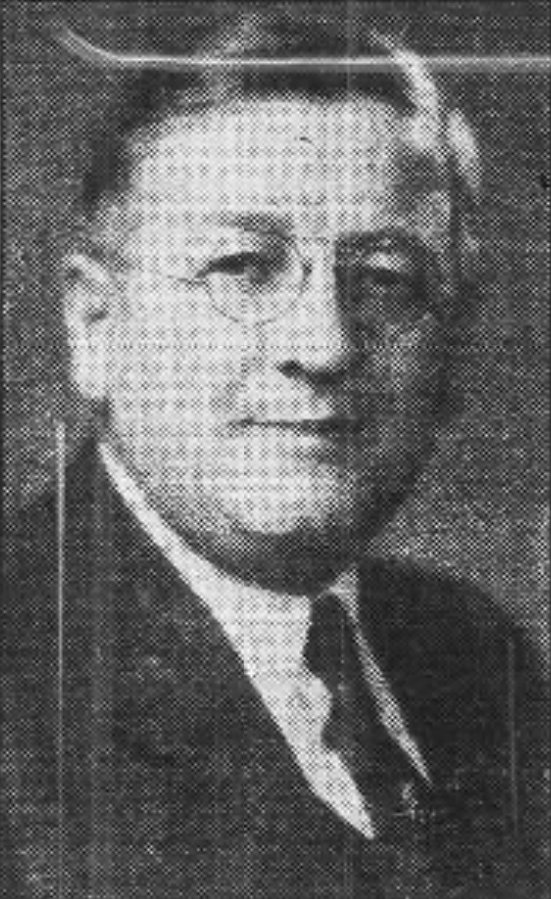
John H. Holm--Kenosha Evening News (15 Jun 1935)
He was remembered as "a man of high character and standing and commanded the respect and confidence of the whole community. He was engaged in the manufacturing business almost all of his life and was an eminently useful citizen, employing a large number of hands. His loss will be much felt in business circles," penned The Eau Claire Leader-Telegram on June 4th, 1911. "Mr. Holm is the inventor of the Holm gasoline engine taken over some time ago by the Northwestern Steel and Iron Works. More recently he with his sons went from Eau Claire to Sparta, Mich., establishing a large plant for the Sears Roebuck company. Still later he returned to Eau Claire and was interested with others in building up the Western Machine Manufacturing company, maker of the Western King Gasoline engine that is gaining so rapid a reputation."
Life Goes On
October (1910) brought a hopeful report in The Grand Rapids Press which detailed RUMORS OF NEW FACTORY--Sears-Roebuck Company May Build at Sparta with sources stated to be "local real estate agents". They said the Chicago company was "contemplating the erection of an immense addition to its gas engine plant and the platting of land for employees' cottages." On December 9, 1910, there was talk of expanding employment to meet product demand as within the past week a train carload of engines were shipped to Portland, Oregon, and another to Dallas, Texas--yet they were a month behind on orders.
Unfortunately for Sparta the big plans never materialized as Sears decided instead to seek out another manufacturer for these engines. From the pages of their own massive retail catalog, Sears found the Hercules Buggy Company of Evansville, Indiana. The mega retailer encouraged them to form the Hercules Gas Engine Company and build a new factory in Indiana. On April 1st, 1913, Iron Age, a trade publication, made the announcement of Hercules Buggy Company's take over of Holm Machine Manufacturing and divulged their plans to build at Evansville. The company claimed those plans were postponed, but by 1914, employment had dropped to 310 people at Sparta. The transition was relatively brief while Hercules operated out of the Sparta location before they transferred the machinery and removed other assets to their new facility--along with enough employees who were willing to relocate to cause a temporary housing crisis.
Loyalty & Love
Likewise, the Bradstrum brothers returned to their parents' family home at Eau Claire when the Holms left Sparta. When the June 1910 Federal Census was enumerated, they were already employed at the engine factory--Phil as a "Patternmaker" and Harry as a "Shipping Clerk".
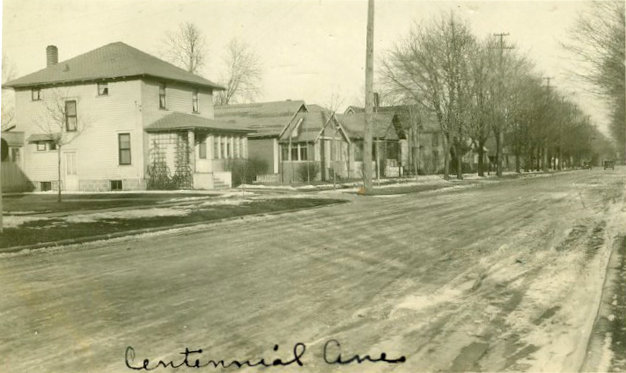
Phil & Delphinia Bradstrum's home, first on left, on Centennial Avenue--courtesy of the Karl Nickolai Collection
However, it wasn't long before Phil Bradstrum made the decision to return to Sparta as he had found not only a home, but on October 14, 1913, also his wife, Elizabeth Delphine Rice, the daughter of David & Elizabeth (Stretchberry) Keister. Della was a former school teacher with a young son, Charles. Her brother, Bruce N. Keister, was a banker at Sparta, who also managed the Sparta Merchants baseball team.
The newlywed couple settled in to married life as they resided at 106 Pearl Street before they later purchased E.G. Anderson's new house on Centennial Avenue.
Two days later, on October 16th, there was another Bradstrum wedding--in Wisconsin. Harry married Miss Selma Charlotte Holm, daughter of the inventor.
Younger Generation Steps Forward
After the father's death, the Western Machine company was dissolved and the five Holm brothers went on to re-create the Holm Manufacturing Company in 1919 at Kenosha, Wisconsin. A retrospective feature entitled Holm Bros. Reach Success in Industry Thru Perseverance--Five Brothers Spread Mechanical Superiority Into Many Fields in Holm's Manufacturing Company was published by the Kenosha Evening News on June 15, 1935. In it, the facility at Sparta was said to have done "over $1,000,000 a year business. At this plant G.A. Holm (Gustaf Adolph) learned his trade as toolmaker. In 1910, the Sparta company was sold to Sears Roebuck and company of Chicago."
Contact
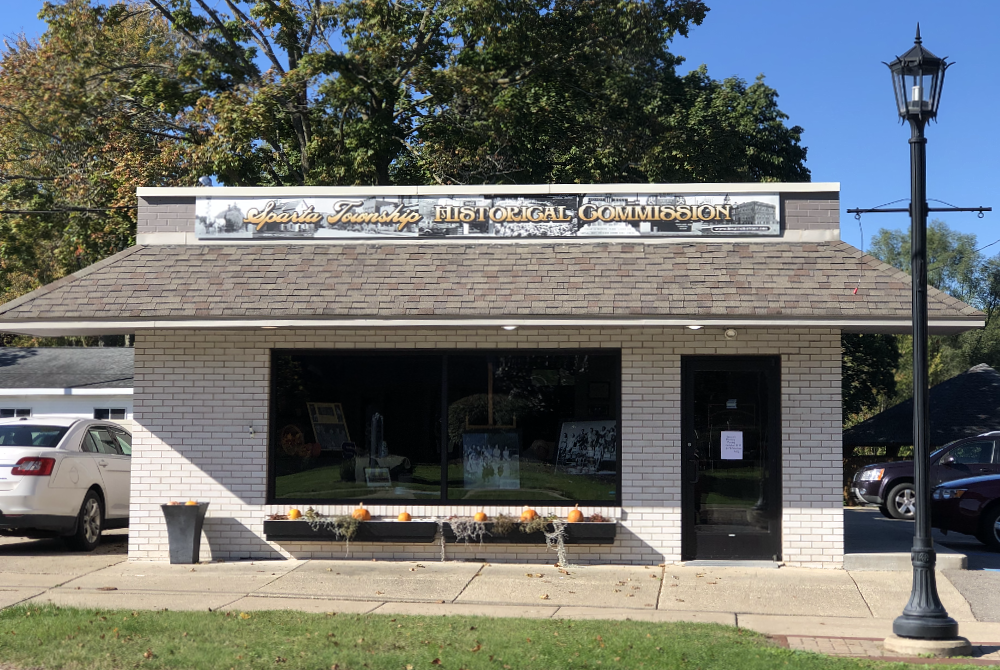
Sparta Township Historical Commission headquarters at 71 North Union Street
Our History Center is conveniently located at 71 North Union Street in downtown Sparta. Please join us for coffee and lively conversation on Monday mornings. Visits to the History Center can also be scheduled by appointment, for your convenience.
We do not receive mail at the History Center, instead, please use our mailing address, which is:
attn: Sparta Township Historical Commission
Sparta Township
160 E. Division St.
Sparta MI 49345
Our complete archives are now available online for your convenience. Just click STHC PastPerfect Catalog Access and begin your research!
For other inquiries, the Sparta Township Historical Commission can be reached by phone at: (616)606-0765 or via email at the following address: